the action is about to happen.
Hovering used to be known as 'air ballet'. This is because the routines are essentially a series of athletic movements choreographed to a piece of chosen music. Not unlike staged ballet, except that it is performed in the air.
It is hard to imagine hovering for minutes at a time while trying to look graceful and keeping in time to the music when carrying out a series of technical movements in the air. And when you emerge to the ground you have to hold a beautiful smile to make it appear as though the whole display is effortless.
Hovering is highly challenging, requiring ease of movements and the ability to stay upside in the air. It is said to be as hard to practice as it is beautiful to watch.
The event lasted 43 minutes.
„I'm proud of our performance this evening,“ said the head technician. „We are very relaxed now but we know that the real work has yet to come, on our road to the galactic tournament. Tonight was a great opportunity for our freshmen to gain experience, and we look forward to competing against other challengers again later this month.“
„I never thought I’d be that good at it,“ s/he added.
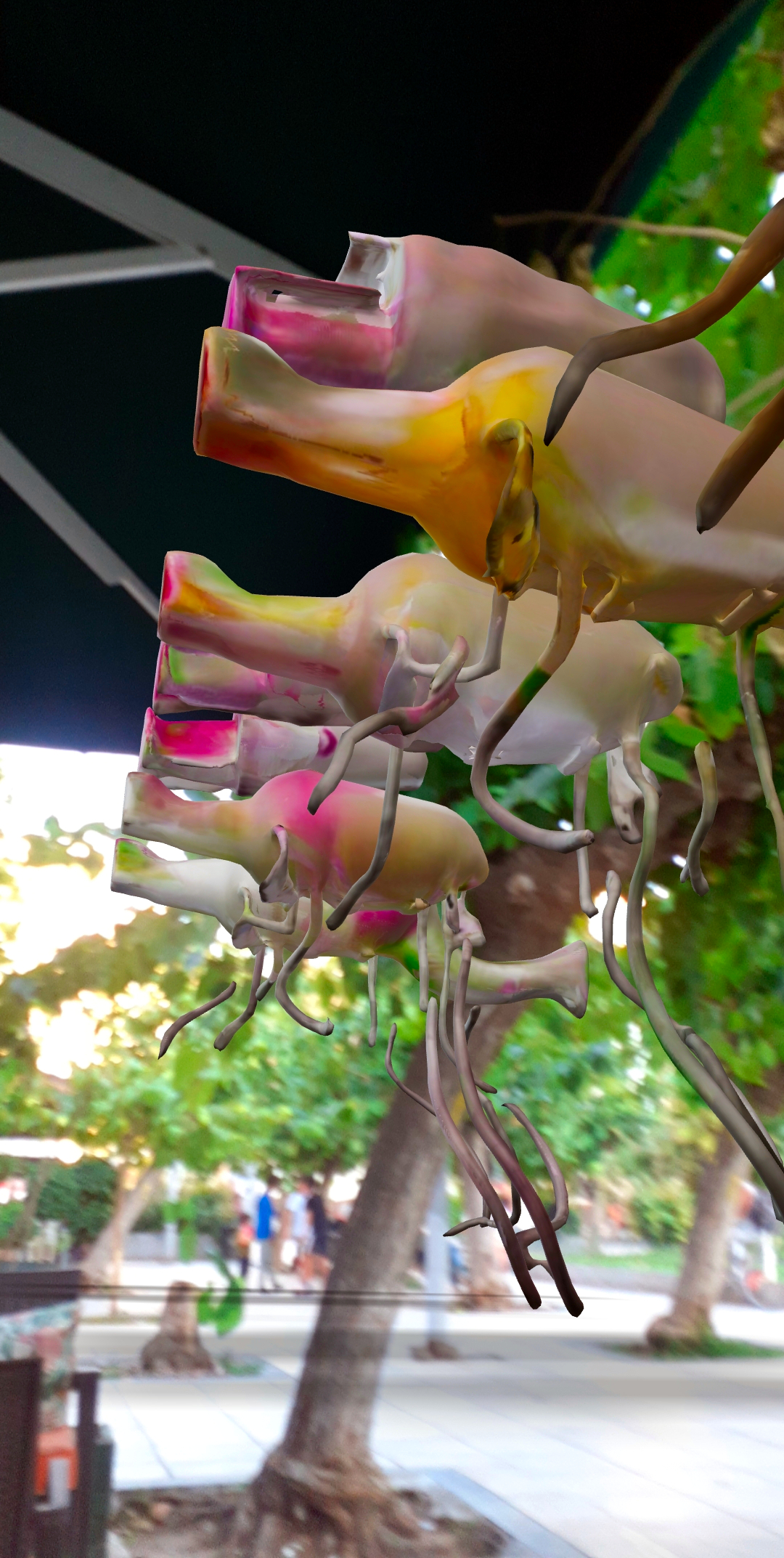
At the makeshift habitat for new dwellers a new born baby has arrived.
The Betelgeuse native parents plummeted to Earth — literally — from their home on Mars where they have spent some months.
They are mission commanders of a high-profile project to create life on Mars. In October, they and their crew members built a huge dome for in vitro fertilization next to their Martian habitat on the slopes where water probably flowed across ancient Mars.
They stayed in a cramped home with an airlock seal and a porthole view of rock and lava, experienced a Mars-to-Betelgeuse delay in online communication — ate freeze-dried food and donned space suits whenever they ventured outside.
"It was very strange," says a University of Betelgeuse engineering graduate and co-founder of a renewable energy company on Mars, in a thought transmission interview.
"We were looking through our visors so we could see Olympus Mons, 21 kilometers high and it was just beautiful and so bright and you could almost feel the wind on your skin."
But it was what came next that really impressed them.
An elevation technican team, operated by the Starfleet Group known as the Hovercrafters picked the crew members up from their perch next to the dome and dropped them from the sky 3,720 metres above the Earth. For the record, the Hovercrafters went skydiving in tandem with them.
"I can't think of a better way to travel to Earth," says one crew member, who has been elevated previously.
"We were at the dome on a chill afternoon. As we were hovering away, you could see all the lava flows, and the lava flows have crystals growing on them. I remember thinking, „Oh my God, crystals, I've missed crystals so much.“
Organic molecules from the atmosphere are forming rings of alien crystals around the lakes that dot the surface.
What's particularly fascinating is that these co-crystals don't just emerge randomly. Instead, we might be looking at structures of alien crystals encircling the methane lakes. This is because when the compounds fall from the sky, they are dissolved in the lakes. As these bodies of liquid evaporate - much like lakes do during Earth's water cycle - the compounds could form co-crystal evaporites around the edges, much like residue in a bathtub drained of dirty water.
You don‘t find these crystals on earth. Pristine alien material from the object 2319876 is being exposed to an audience for the first time.